
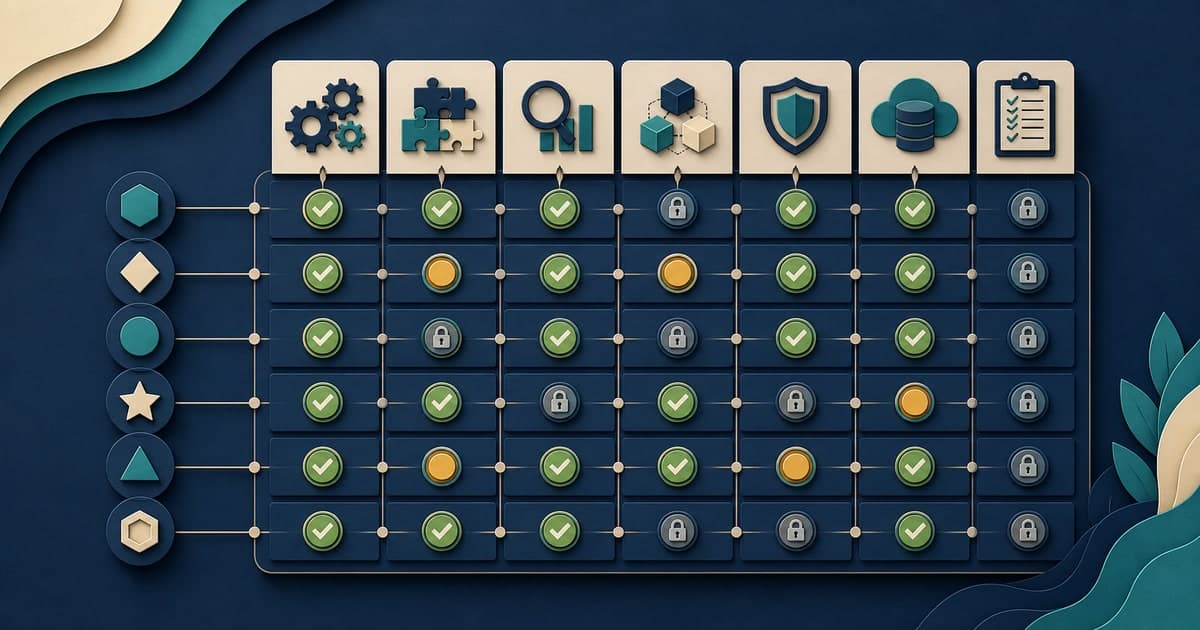
Cross-training coverage and verified readiness
A training roster proves attendance, not independent task readiness. Coverage also depends on current access, procedural knowledge, supervision needs, evidence recency, and rules that prevent one person from performing incompatible steps. Treating a job title or completed course as full coverage can overstate resilience.
OPM describes cross-training as learning tasks within a department so colleagues can provide coverage. Its guidance supports the practice, while a local study must still define what evidence qualifies someone to perform a particular task.
Start with tasks, not people
List recurring tasks at the level where absence would interrupt delivery. For each one, record frequency, trigger, accountable owner, required systems, approval authority, expected evidence, and the consequence of delay. Grouping all finance, customer, or vendor work into one row hides important differences.
Define readiness states before assessment. Useful states include observed, trained, performed with supervision, independently demonstrated, current, expired, access blocked, and prohibited by control design. The OPM needs-assessment guide distinguishes required performance from current knowledge and skill, which is a sound basis for separating a requirement from evidence of readiness.
The matrix should describe task coverage, not rank people. Use objective artifacts such as a completed practice case, reviewed work sample, system-access check, or supervised live execution. Store the evidence date and reviewer because capability can lapse when procedures or tools change.
Test coverage under explicit scenarios
Count a task as covered only when at least one available person meets the frozen readiness rule for that scenario. Run ordinary absence, simultaneous absence, peak demand, and system outage separately. A person assigned to several tasks cannot provide simultaneous coverage everywhere.
Do not ignore access and control conflicts. Independent capability is not permission to approve one's own work or bypass segregation of duties. NIST security controls include least privilege and separation of duties, so the coverage record should preserve constraints instead of treating them as training gaps.
Report tasks with no verified backup, one verified backup, multiple backups, expired evidence, blocked access, or prohibited combinations. Avoid combining those conditions into a single readiness score unless the weighting was approved before results were seen.
Turn gaps into bounded actions
A missing backup can lead to documentation, supervised practice, access preparation, vendor support, or an approved continuity decision. It does not automatically justify granting broad access or changing approval controls. The NIST contingency guide pairs personnel training with testing, reinforcing the difference between having a plan and exercising it.
An operations coordinator can maintain task definitions, schedule evidence reviews, and flag expiring coverage. Managers retain responsibility for authorization, performance assessment, staffing, and control exceptions. Our operations support services can coordinate the evidence cycle, and the Research index contains other capacity studies.
Sources and limits
- OPM training options, for the purpose and use of cross-training.
- OPM needs assessment, for required and current performance gaps.
- OPM workforce planning, for competency gaps and continuity.
- OPM developmental assessments, for structured competency gap analysis.
- OPM career development, for linking competencies and development.
- OPM workforce priorities, for skills inventories and knowledge transfer.
- NIST contingency planning, for training and testing continuity responsibilities.
- NIST security controls, for least privilege and separation of duties.
- CISA continuity planning, for continuity as an organized capability.
- FEMA continuity resources, for continuity planning, training, and exercises.
These sources support a task-based coverage design. They do not authorize access, certify competence, or set a universal backup count. This article is operational research guidance, not employment, security, legal, or business-continuity certification advice.