
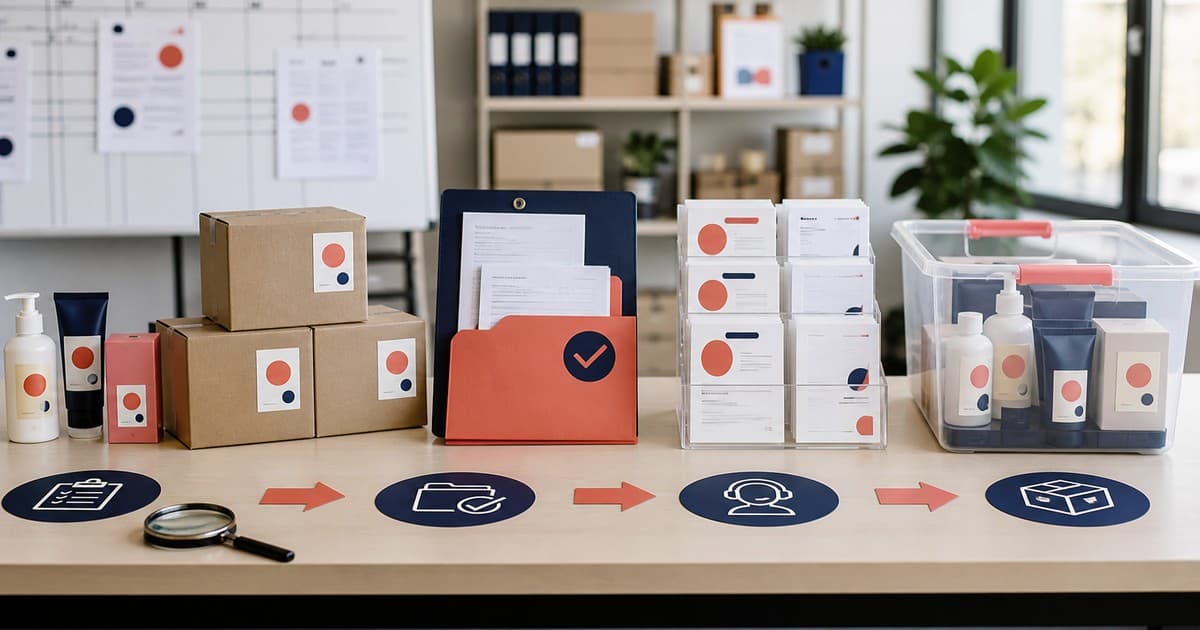
A product recall creates urgent administrative work, but urgency does not remove the need for controlled decisions. A virtual assistant for product recall coordination can maintain affected-product lists, approved notices, response status, and return evidence. Product safety, legal, regulatory, and executive owners retain every reporting and remedy decision.
Activate only from an approved plan
Record the recall owner, affected product identifiers, manufacturing or distribution scope, customer population, approved remedy, reporting obligations, communication channels, and escalation path. Do not let an assistant decide that a complaint is a recall or define the affected population from intuition.
The U.S. Consumer Product Safety Commission maintains recall guidance for businesses, including reporting, notification, corrective action, and progress-report resources. Requirements depend on the product and facts. Qualified owners should interpret them and issue the instructions the coordinator follows.
Protect product and customer identity
Use exact model, lot, batch, serial, date, and distribution records approved by the product owner. Keep the query logic and extract time. A customer may own several products, while one product may have changed hands, so preserve the relationship between the unit and the contact evidence.
Limit personal data to the recall team members who need it. Use approved secure systems for customer lists and response tracking. Do not paste the entire population into chat or uncontrolled spreadsheets.
Send only approved communications
Maintain a version-controlled library for email, letter, web, retailer, call-center, and social responses. Record who approved each version and when. Agents should use the current script, preserve customer questions, and escalate safety, injury, legal, media, and unusual remedy issues immediately.
Track delivery, acknowledgement, chosen remedy, return or disposal instructions, completion evidence, and unreachable status. Do not mark a customer complete merely because a message was sent.
Reconcile products, contacts, and remedies
Run controlled comparisons between the affected population, notices sent, responses, units returned or corrected, and unresolved cases. Investigate duplicates and identifier mismatches without deleting source records. Changes to scope require the recall owner's approval and a new population version.
Provide the approved summary cadence to leadership and regulators. The coordinator may compile counts from controlled records, but should not interpret recall effectiveness or alter required reports.
Close with evidence and retained history
The end state should link the approved recall scope, communications, customer outcomes, product disposition, unresolved exceptions, and formal owner sign-off. Retention and disposal follow legal and company requirements.
Administrative support can make a recall response orderly and traceable. Hazard evaluation, reporting decisions, public claims, remedy design, regulatory contact, and final closure remain with qualified authorities.