
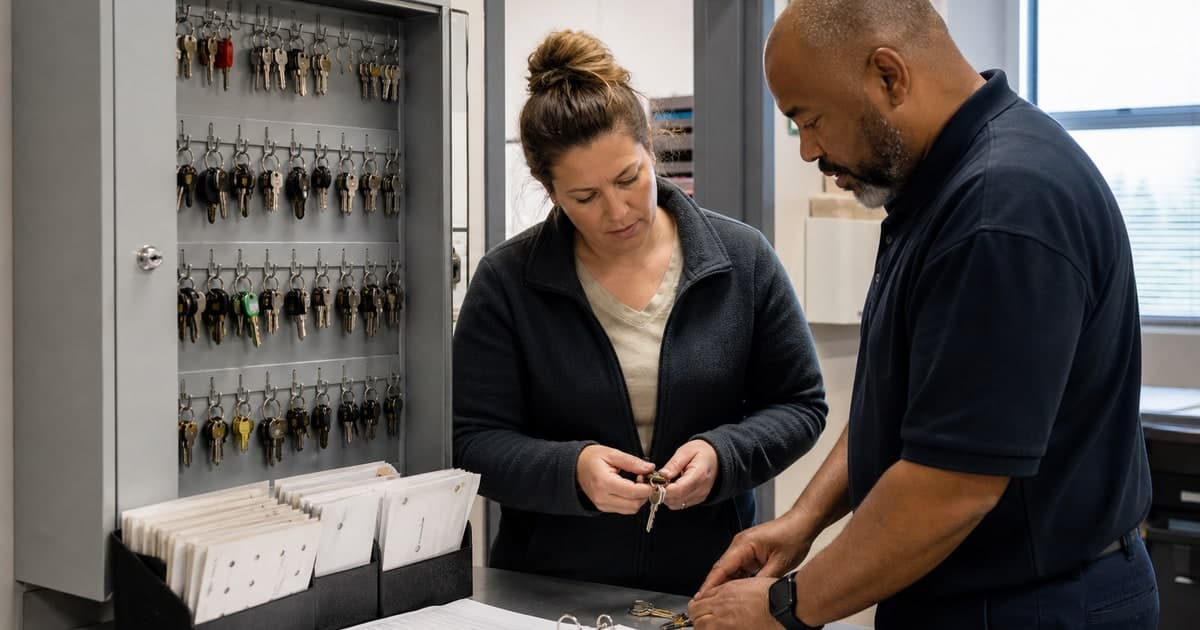
A badge system can show an account disabled while a physical key, parking credential, or temporary pass remains unreturned. A virtual assistant can reconcile the access-item inventory and chase owner confirmations. Security, facilities, managers, and people operations retain access and employment decisions.
Give each item a stable identity
Record the key or badge identifier, type, controlled area, current holder, issuing owner, issue date, acknowledgment, expected return, status, and evidence location. Avoid storing access codes or sensitive door mappings in a general spreadsheet.
The FTC's physical security guidance for small business recommends an up-to-date inventory of devices and files and practical controls for physical information security. The same inventory discipline helps facilities teams account for access items.
Separate assignment from permission
An item can exist without being authorized for current use. Track requested, approved, issued, acknowledged, suspended, return due, returned, lost, destroyed, and verified as distinct states. Only the approved owner changes permission.
The assistant can prepare issue and return records, arrange appointments, and request missing acknowledgments. They should not duplicate a key, encode a badge, grant access, or decide that a lost item creates no risk.
Handle exceptions promptly
Route lost, damaged, shared, unlabeled, duplicate, or overdue items through the security process. Record the report time, owner, temporary control supplied by that owner, replacement, cost handling if applicable, and closure evidence. Do not put sensitive incident detail in a broad inventory view.
Periodic counts should preserve the observed result before corrections. A cabinet count that differs from the register needs review, not a quiet edit.
Reconcile lifecycle events
Compare the inventory with onboarding, transfers, leave, departures, vendor access, and location changes on an approved cadence. Report unresolved items and stale holders without inferring misconduct.
The assistant owns register quality, reminders, appointment logistics, and evidence links. Security and facilities owners approve and fulfill access. Managers validate business need. People operations supplies authorized lifecycle events.